See the whole architecture
Understand components, interfaces, timing, failure modes and the relationships that determine whether a solution actually works.
I'm Newell V. Starks. My work has crossed electrical engineering, computing, venture capital, leveraged buyouts, board leadership, and building companies. The common thread is performance: understand the system, evaluate the economics, and take responsibility for the result.
A firsthand perspective from the engineering bench and the controlling investor’s side of the boardroom.
I approach businesses from the perspective of an owner. Understand the mechanics, the people and the cash flows; make the tradeoffs explicit; and judge whether management delivers. A technically elegant answer that cannot be implemented is not an answer.
Understand components, interfaces, timing, failure modes and the relationships that determine whether a solution actually works.
Look beyond reported numbers to the working capital, investment, operations and judgment that produce sustainable economic results.
Design for practical execution, clear decision authority, recoverability and the consequences of decisions—not merely appealing concepts.
A selected chronology rather than a comprehensive résumé. The more personal stories and interpretations below are drawn from my own recollections.
Experimental computer hardware, digital logic and my first assembly-language programming. The early lesson was practical: understand a system all the way down to how it actually works.
From systems engineering and industrial automation to marketing and technology planning. In 1979 I chaired a worldwide ten-year computer forecasting group under Eckhard Pfeiffer's leadership. In 1981 I conceived the Traveling Office Peripheral System (T.O.P.S.), a portable computer concept developed through TI's I.D.E.A. program.
Led ECAM, a separately incorporated Everett/Charles subsidiary, moving from technical and commercial roles into direct operating responsibility.
Recruited back to TI in Dallas by Frank Spitznogle, a former supervisor in Austin. I negotiated Department Manager status as part of the return, which required the approval of TI President Fred Bucy during a worldwide hiring freeze. Eckhard Pfeiffer, then a Corporate Vice President, already knew my work from the 1979 worldwide forecasting initiative.
Investing, leveraged buyouts, capital structures, management incentives and active governance. Learning accounting and finance was a second technical education: building three-statement acquisition models and understanding where sustainable cash flow truly comes from.
After 22 months of negotiations, we closed our 1986 acquisition of Trompeter Electronics. Sterling later included Semflex. Both businesses generated cash, giving us room to invest, distribute capital and make consequential ownership decisions.
When I left Citicorp Venture Capital in 1991, I stayed on Sterling's board and remained actively involved. I later initiated its merger with Stratos. I flew to New York, proposed the merger to Citicorp Venture Capital, and that I become Chairman of the Board of Sterling, as Citicorp Venture Capital's representative, to make it happen. I became Chairman of the Board, and the merger closed in late 2003.
Following the late-2003 Sterling–Stratos merger, I worked on capital preservation, operating performance, governance and strategic direction through the 2007 exit.
Dates are deliberately approximate where the precise appointment record has not yet been confirmed. Accounts of internal deliberations are firsthand recollections, not statements on behalf of the organizations.
T.O.P.S. — Traveling Office Peripheral System — began in a hotel room while I was visiting Kodak. Thinking about the future of TI's Silent 700 terminals, I used a yellow notepad to work out the size of a portable computer that would fit in a salesperson's briefcase.
The concept combined a full-stroke keyboard, LCD, memory and communications in a design intended to improve as components evolved. TI's I.D.E.A. program funded the initial work, supported by Mark Fowler, Bill Murto and Rod Canion; a larger team developed the prototype.
Who is carrying it? What must it do? What can the technology support today? How should the design evolve tomorrow?
The historical story reflects my recollection of the concept and initial project, not a claim of sole responsibility for subsequent engineering.
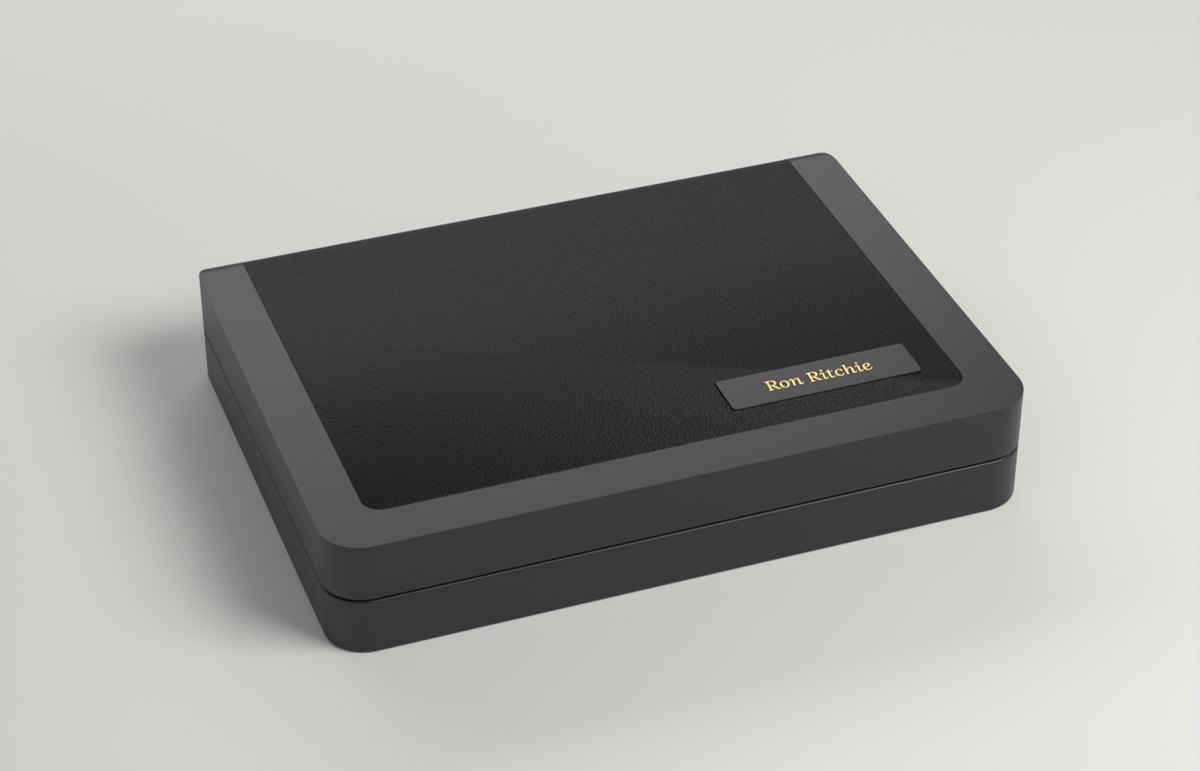
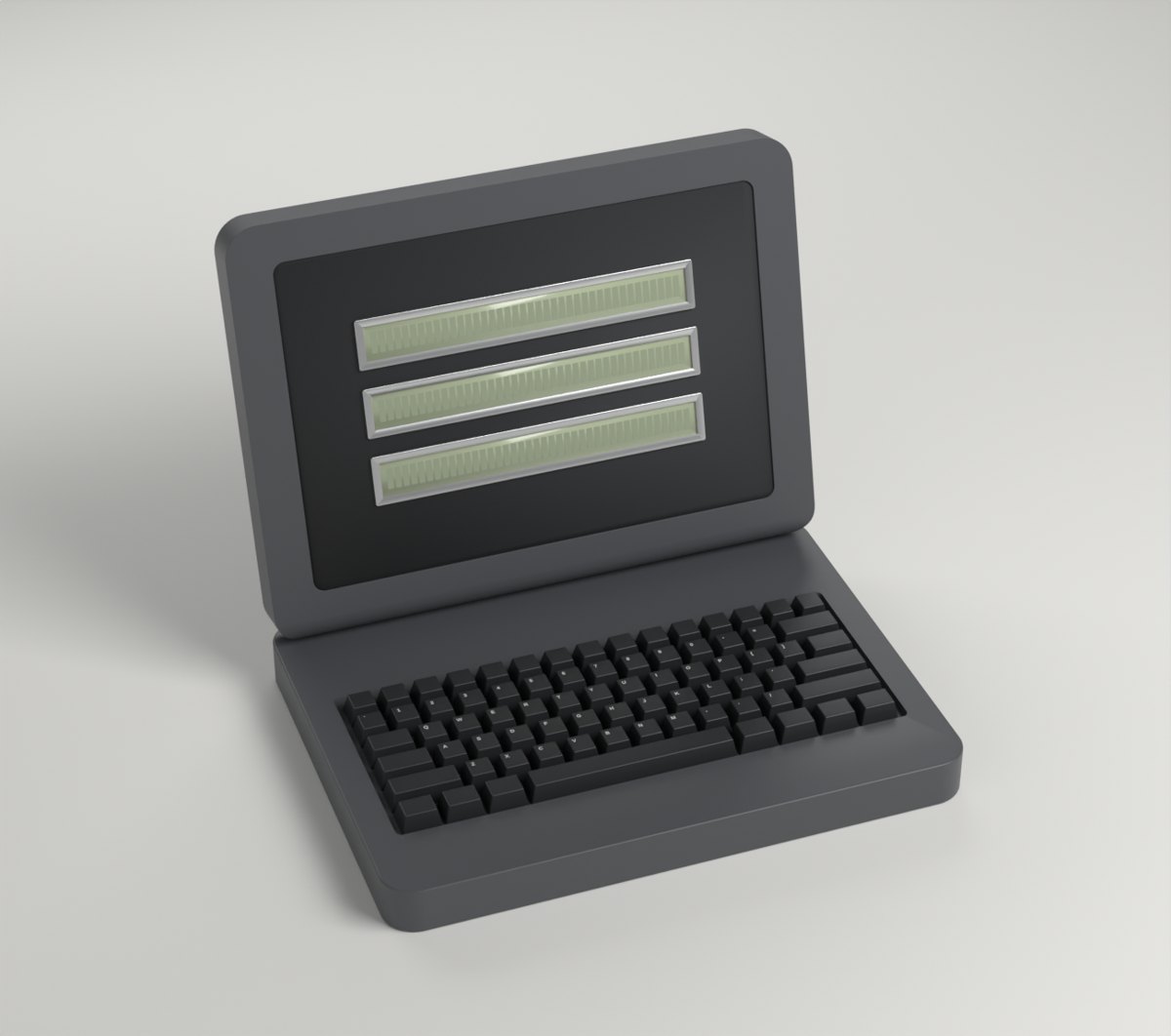
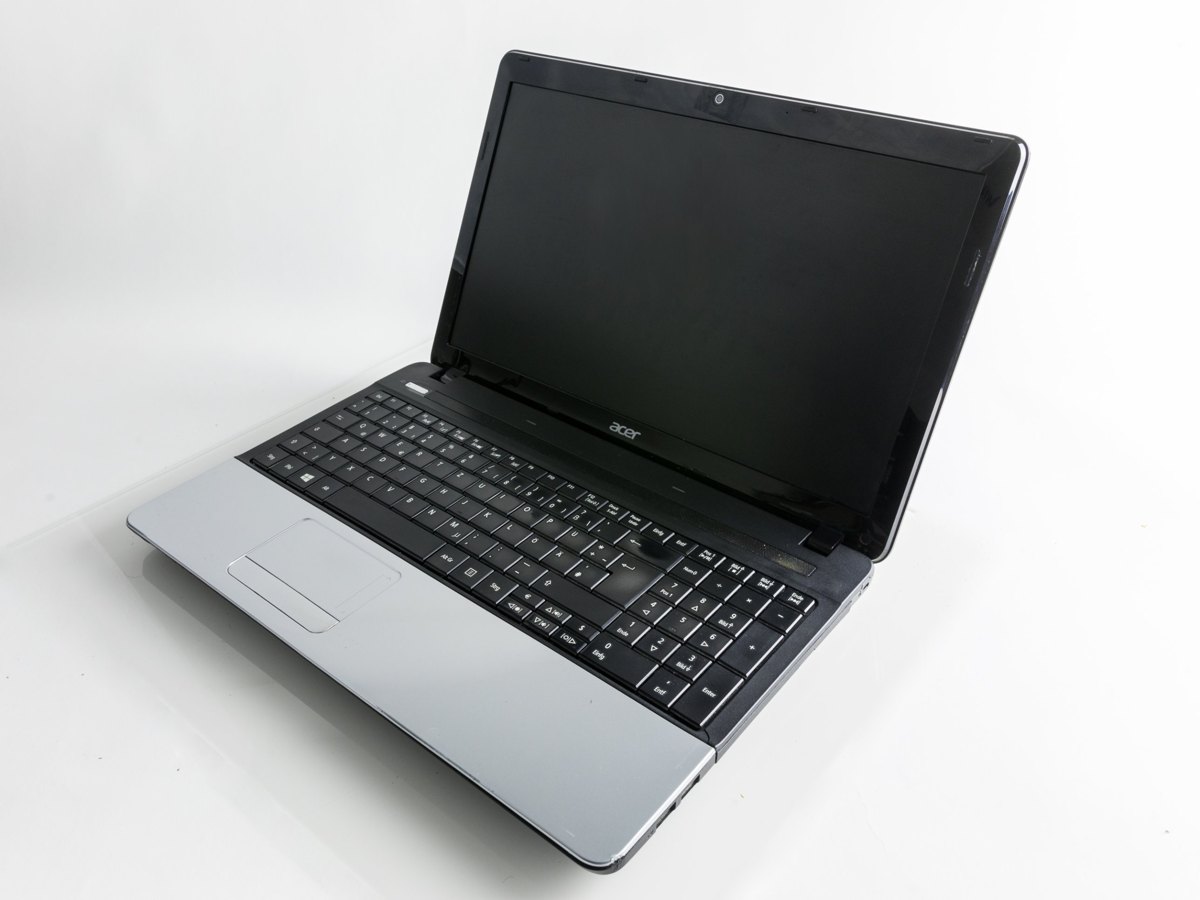
TI sold its entire notebook product line to Acer in 1997, and Acer continues the TravelMate line to this day. It has certainly evolved to include numerous features I never envisioned, including trackpads, numeric keypads, cameras and fingerprint readers.
To the best of my knowledge, the T.O.P.S. model is held by the Smithsonian Institution, along with photographs of it. Links to these were once available online but no longer work, so the first two images were rebuilt from my recollection of the model.
T.O.P.S. was intended as the next generation of TI's Silent 700 portable data terminals, for the professional salespeople who already carried them. It was sized to a notepad so it would fit a briefcase, and it used a telephone jack in place of an acoustic muff. I chose LCDs because, of the display technologies available, they were the most likely to improve along the cost curve. As panels, memory and processors improved, TI's field service force could upgrade each unit in the field.
Read the 1981 design considerations →The most durable lessons came from people, decisions and occasions when the numbers were easy but getting the organization to act was difficult.
I loved working at TI. It had extraordinary engineering depth. I also believed that its computer ambitions suffered when management expertise was transferred from other industries rather than recruited from computing. Much later, greater strategic focus allowed its technical strengths to count for more.
George Heilmeier could understand the work of brilliant innovators in astonishing detail and remember it years later. He was enthusiastic, approachable, and always smiling. Once, when I was nervous presenting a couple of viewfoil slides to TI's board, he asked a gentle question that helped me through a difficult moment. I remember that kindness more vividly than the slides.
At CVC I learned that tax, governance, preferred securities, debt, management incentives and cash flow form one system. The hard work is to understand the owner's objectives, structure the incentives, and anticipate how the arrangements behave when circumstances change.
At the Sterling–Stratos merger, my objective was cash-flow breakeven. Sterling's operations generated cash and Stratos was consuming it, so the idea of the combination was that one should offset the other. The first quarter after the merger disappointed, and I pressed the board to change leadership. Nancy, my wife, was not in the meeting, but she traveled with me from time to time and knew some of the people and their personalities. She helped me recognize that one financially minded director could be won over by the merits, breaking a stalemate.
“I finish what I start, even if it takes decades.”
Persistence matters. So does being willing to change the method when the evidence demands it.I am building NewellOI around a straightforward idea: AI should help owners run better businesses without surrendering judgment or control. The aim is practical automation, durable institutional knowledge, verifiable execution and clear accountability. This is work in progress.
For thoughtful introductions or conversations about systems, investment, technology, or enterprise building.
